TIPS, TRICKS & HOW-TOs
The Bendy Blog: Flexibility Training Articles
Filter posts by topic:
All Posts / Bridges / Contortion / Front Splits / General Back Flexibility / General Flexibility Tips / General Lower Body Flexibility / Middle Splits / Neurodynamics / Shoulders / Straddles / Yoga /
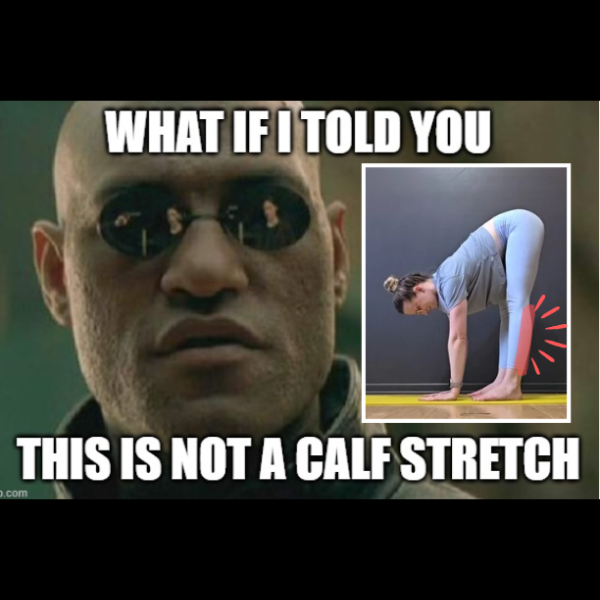
What Is Sciatic Nerve Tension (and How Do I Fix It?)
This is a topic I wish I had learned about WAY earlier in my flexibility training journey, because it made such a huge difference in my leg flexibility (and I see the same thing happen with many students that I work with).
For the longest time, I just thought I had tight calves when it came to forward folds . . .
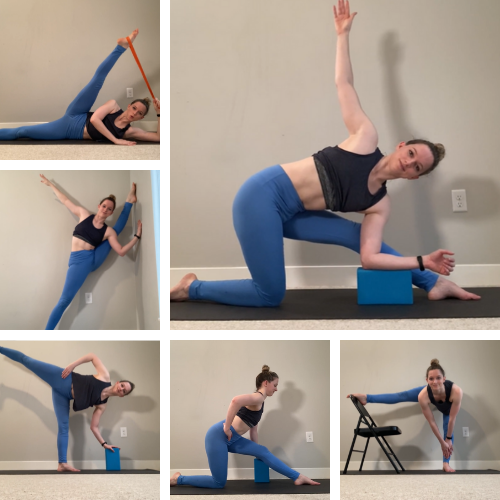
Lift That Leg! 7 Stretches for a Higher Y Scale Leg Hold
A “Y Scale” or a side leg hold is one of my favorite standing contortion shapes because it’s one of the first ones I ever learned to do. Most students tend to enjoy this shape because it looks cool (obviously!) and is typically easier to train than a “traditional” standing split or the even-more-complex needle scale.
Earlier this week I posted a quick how-to showing the basic mechanics of how to do a Y scale. Today we’ll be looking at how to make it look bendier (working on our flexibility to lift the leg higher, make it look split-ier, etc).
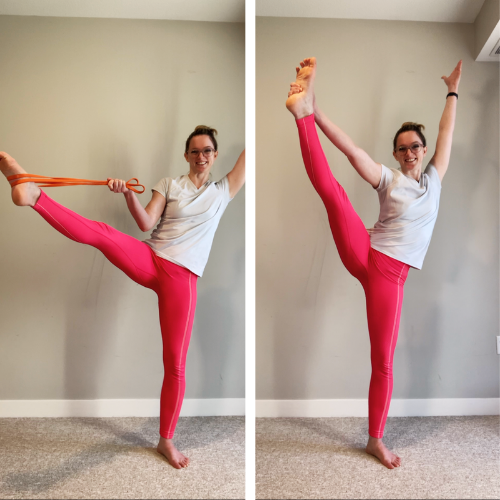
How to Do a Y Scale Leg Hold
A standing side leg hold, often called a “Y Scale” in the contortion world, is a fun (and impressive!) standing balance that showcases leg flexibility. Unlike a “regular” standing split, a Y Scale is an open split position that allows for both turn-out in the hips, and a tilt of the hips to maximize how high we can lift our leg.
Let’s look at two ways to do this pose: both the traditional standing variation, as well as an easier-to-balance variation lying on the floor.
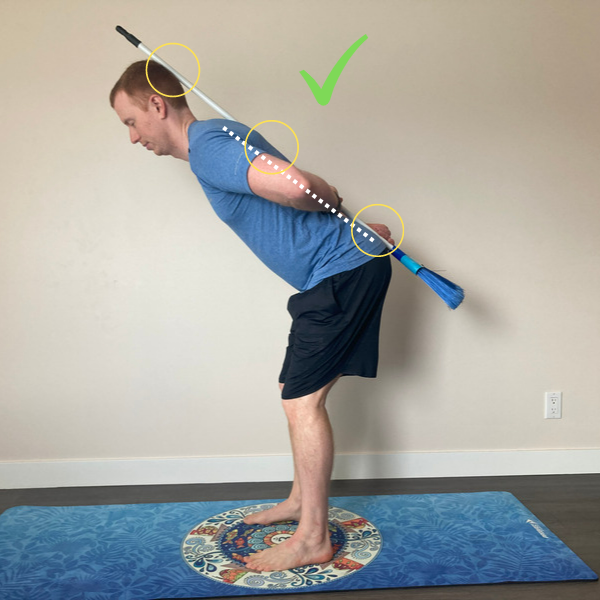
Struggling to Keep Your Back “Flat” in a Forward Fold? 5 Tips to Hinge at the Hips
Earlier this week I wrote about why you may choose to keep your back flat (instead of letting it round) in a forward fold - but for many students that’s easier said than done! Like I’ve mentioned in previous posts, our body is really good at avoiding a challenging stretch and compensating by moving other joints (in the case of a forward fold, when the hips are tight that means we tend to try and round the spine to “fold” or reach farther). So for those of you wanting to practice your forward folds with a flat back, here are some of the best modifications and training adjustments I’d suggest.

Is it OK to Round Your Back in a Forward Fold?
Do I have to keep my back flat in a forward fold, or is it OK (and safe) to round it? Like with most flexibility-related questions, the answer is “it depends.” So let’s take a look at why you’re doing your forward fold, and discuss different situations where rounding-vs-flattening your back would be a better choice for your particular goals.

Proper Pelvic Position for Hip Flexor Stretches
Our hip flexors are pretty sneaky when it comes to avoiding being stretched - watch out for these two common compensations our hips wiggle into to avoid actually stretching our hip flexors to their maximum extent.
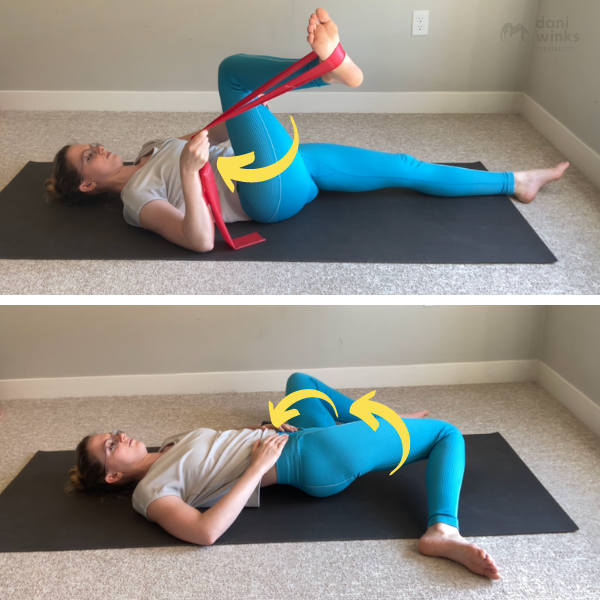
Gentle (Passive) Stretches for Internal Hip Rotation
Last week we talked about internal hip rotation in the “active” sense, why this range of motion is important in both everyday life (and potentially in your flexibility-related hobbies), and how to train the active mobility to move through as much of a safe range of motion while strengthening your stabilizing muscles. Today we’re talking about relaxed passive stretches you can also include in your training if you need to increase your overall ROM.
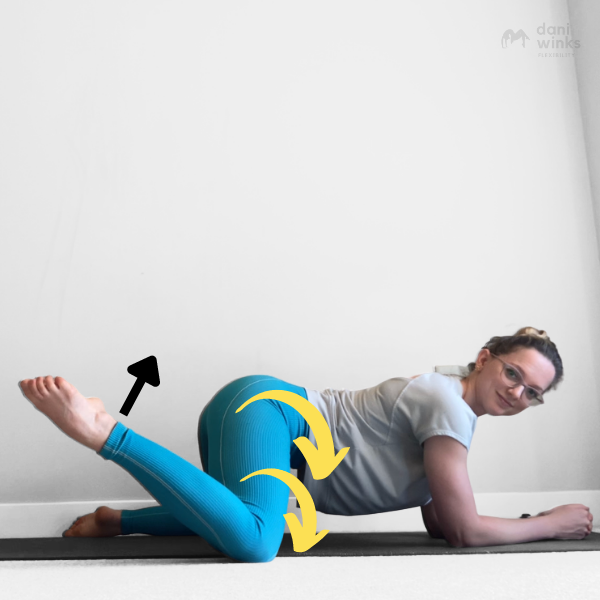
Strengthen While You Stretch: 6 Drills for Active Hip Internal Rotation
Hip rotation in general is not only helpful for many stretches/skills, but a necessary part of everyday movements like walking and running. Internal hip rotation specifically refers to the action of rotating our thigh internally (towards our midline). But since this isn’t an action we often use in everyday life, most people are quite weak (and inflexible) when it comes to internal rotation. So here are some great active flexibility exercises to help improve your hip mobility and strength in internal rotation.
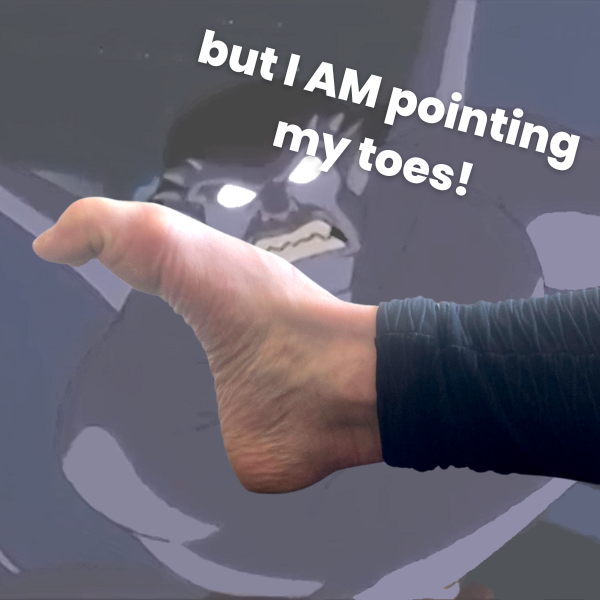
Getting a “Pointier” Toe Pointe
The cue “point your toes” can be a bit misleading, because often when we talk about a traditional, ballerina-style toe point (aka “pointe”), what we really mean is point your ankle (and then point your toes). If your coach has yelled at you to point your toes before, and your foot automatically curls into a gargoyle claw, while technically correct (you are, in fact, likely pointing your toes), if you want the traditional aesthetic lines of a nicely pointed foot, you’ll have to work on your ankle flexibility. Lucky for you I have a slew of exercises and stretches that can help, including ones that isolate the ankle stretch from your toe pointing (no gargoyle toes allowed!).
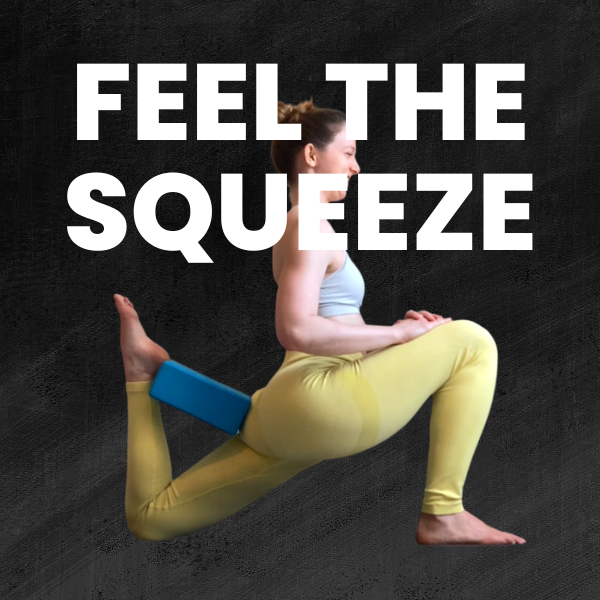
Advanced Quad and Hip Flexor Stretches for Contortion
If you’ve got relatively flexible hip flexors and quads (ex. you can easily pull your heel to your butt in a standing quad stretch, and/or you have flat splits) - it may be time to up your hip work for those muscle groups.
These are all deep anterior (front of the) hip stretches that may make you feel your quads like you’ve never felt them before!
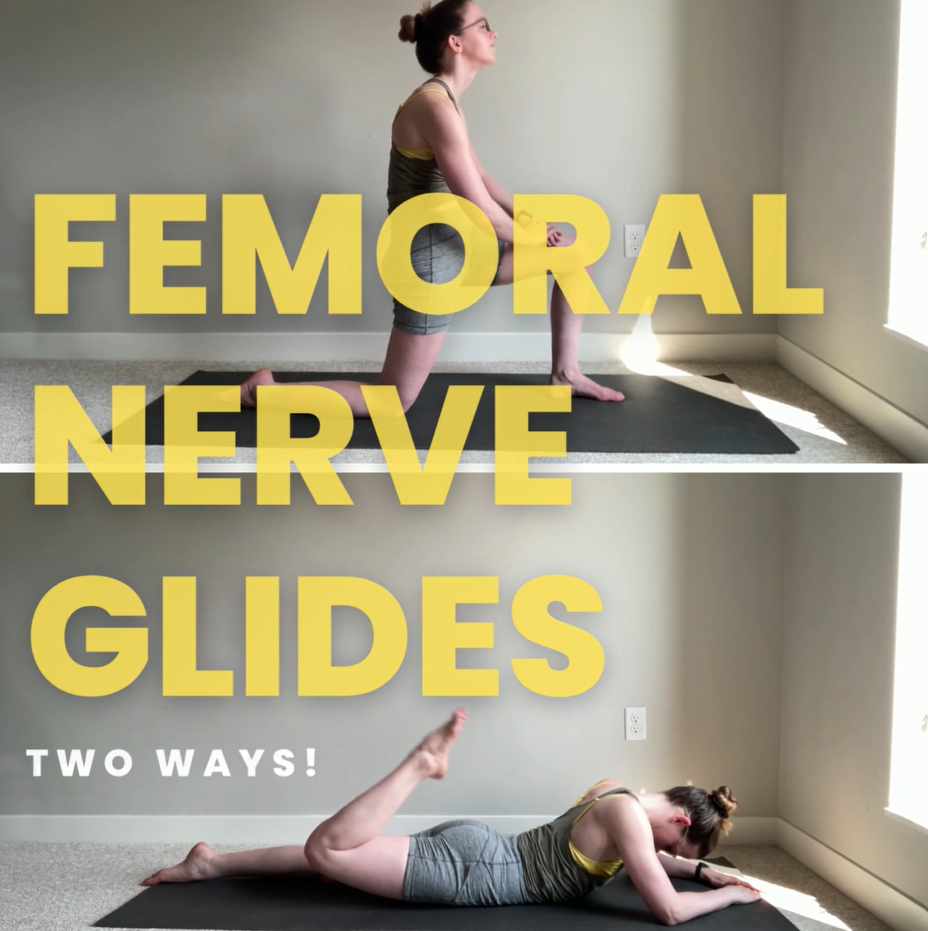
How To: Femoral Nerve Glide for Tight Hips (2 Ways!)
As a follow-up to Monday’s post, Stubbornly Tight Hip Flexors? Quick Test for Femoral Nerve Tension, here are two quick, easy nerve glides you can do to help un-stick your femoral nerve before lunging into deeper stretches (pun 100% intended).
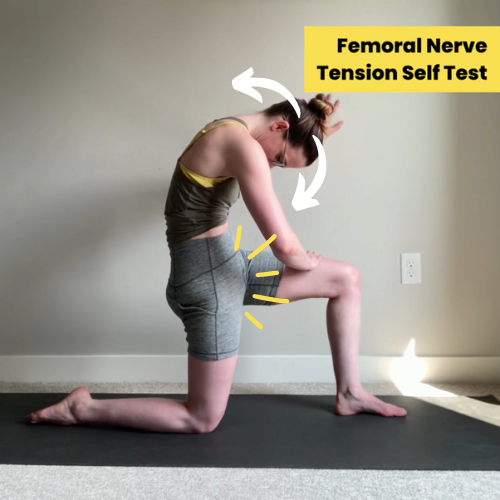
Stubbornly Tight Hip Flexors? Quick Test for Femoral Nerve Tension
Do you feel like your hip flexors (or quads) are always pretty stiff, even when doing regular, dedicated stretching? What if I told you the culprit may not be your tight muscles at all and no amount of passive lunges and hip stretches would really make a difference?
Time to learn about the role of our good ol’ femoral nerve and how it behaves differently in out stretches than our hip flexors and quad muscles.